Reading a Peptide Name Without Panic
Hyphens, Greek letters, one-letter codes and "-tide" endings. A short decoder for the alphabet soup on labels and papers.
Three naming systems at once
A single peptide can have a chemical name, a research code and a brand name. That is why a label can look like an eye test.
1. The sequence
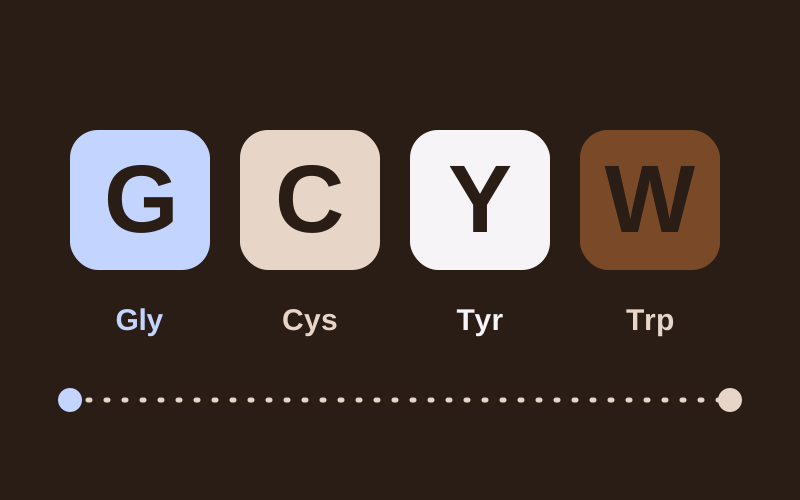
Scientists write sequences from the N-terminus (the free amine end) to the C-terminus (the free acid end), the same direction a cell builds them. Each amino acid has a three-letter and a one-letter code:
| Amino acid | 3 letters | 1 letter |
|---|---|---|
| Glycine | Gly | G |
| Alanine | Ala | A |
| Cysteine | Cys | C |
| Tyrosine | Tyr | Y |
| Proline | Pro | P |
| Tryptophan | Trp | W |
So Gly-Cys-Tyr and GCY are the same tripeptide. A short peptide can often be read like a word, which is how some labs name them by sequence.
2. Odd prefixes and letters
- D- or L-: mirror-image forms of an amino acid. Nature uses L. A D-version is not recognized by most digestive enzymes and survives longer.
- Greek letters such as the gamma in glutathione (a tripeptide) show an unusual bond between side chain and chain.
- Ac- and -NH2 at the ends mean the ends were capped. Capping protects against enzymes.
- Numbers in brackets, for example (1-34), say which part of a longer molecule you are looking at.
3. The drug suffix
International Nonproprietary Names follow patterns. Many peptide drugs end in -tide, such as semaglutide or liraglutide. Others hint at their target: -relin for analogues of gonadotropin-releasing hormone, -glutide for GLP-1 analogues, -pressin for relatives of vasopressin. The suffix will not tell you whether a product is any good, but it tells you the class and, importantly, that the name was assigned through a regulated process.
Warning signs in names
- A brand-like name with no INN or sequence behind it.
- A code such as "XY-123" sold to consumers. Research codes belong in laboratories and papers.
- Capitalised "blends" with no list of ingredients.
Key takeaways
- Sequences read N to C; one-letter codes are shorthand.
- D- amino acids, caps and rings change stability, not magic.
- A suffix like -tide signals a formally named drug class.
Educational only. Not medical advice. Read the disclaimer.